
How Can Managed Salesforce Services Support a Charity’s Internal Team
Managed services can give a charity access to Salesforce administration, technical advice and continuous improvement without requiring every specialist capability to sit permanently inside the organisation.
Is Your Charity’s Data Ready for Salesforce Automation and AI
Automation and AI can only work reliably when the underlying information is accurate, consistent and appropriately governed. A data-health review helps a charity understand what it can trust and what needs attention first.
What Should a Charity Do When Its Salesforce Transformation Has Stalled
A delayed or underperforming Salesforce programme does not always need to be abandoned. A structured review can reveal whether the blockage sits in governance, processes, data, technology, capacity or a combination of all five.
Why Successful Salesforce Transformation in Charities Starts with People and Processes
A Salesforce implementation can be technically sound and still fail to deliver the improvement a charity expected. The deciding factor is often whether the organisation has prepared its people, processes and operating model for the change.
How Can Charities Test Salesforce Changes Without Putting Fundraising at Risk
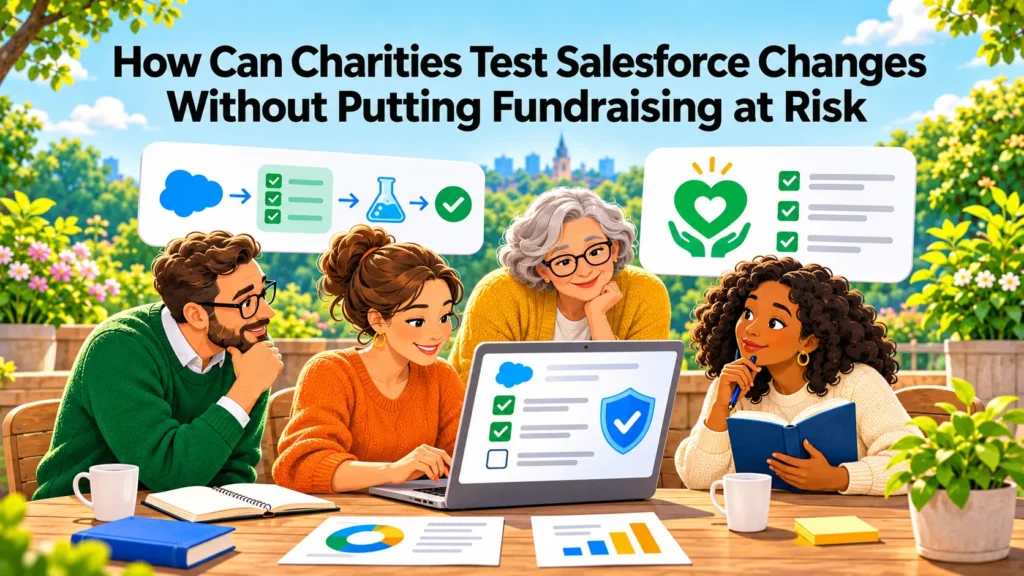
A Salesforce update can affect much more than the component being changed. Regression testing helps charities identify the hidden impact on donations, Gift Aid, recurring giving, reports and integrations before a release reaches users.
What Should Charity Trustees Ask Before Approving a Salesforce Project?
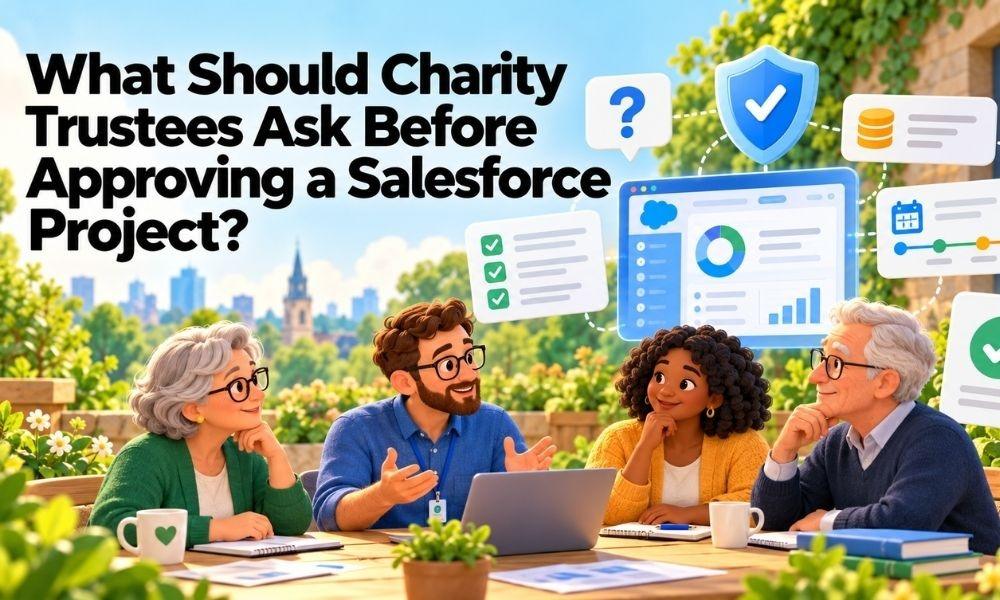
Before approving a Salesforce project, charity trustees should understand why the investment is needed, what outcomes it will support, what it will cost, which risks have been identified and how success will be measured. They do not need to become Salesforce experts, but they do need enough information to make and record a properly informed […]
How Should a Charity Compare Salesforce Partner Proposals?

A charity should compare Salesforce proposals by examining the outcomes, scope, assumptions, delivery approach, nonprofit experience and long-term costs behind each price. The lowest quotation is not necessarily the best value, particularly if it excludes discovery, migration, integrations, training, testing or post-launch support. When several partners submit proposals, it can be tempting to put the […]
How Should a Charity Write a Salesforce CRM Brief?
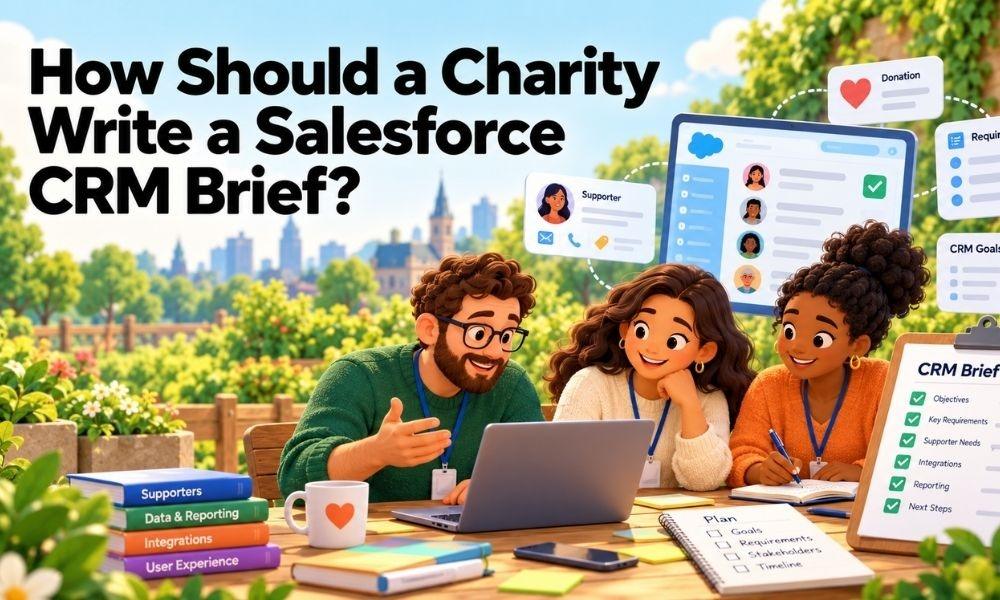
A charity should write a Salesforce CRM brief around the outcomes it needs to achieve, the people and processes the system must support, the information it holds and the problems with its current way of working. It should explain the organisation clearly without attempting to design the technical solution before speaking to a Salesforce partner. […]
How Should a Charity Prepare for a Salesforce Data Migration?

Moving to Salesforce gives a charity an opportunity to improve how it manages supporters, fundraising, volunteering and services. But the success of the project depends heavily on what happens before any records are transferred. Many charities have spent years building up information across fundraising databases, spreadsheets, website forms and other systems. Some of that information […]
How Can a Charity Improve the Quality of Its Salesforce Data?

A charity’s Salesforce data should help its teams understand supporters, manage fundraising, coordinate services and make informed decisions. When that information is unreliable, even straightforward tasks become difficult. A supporter might appear three times in the database. A donation could be associated with the wrong record. Communication preferences may be inconsistent, while important information remains […]